
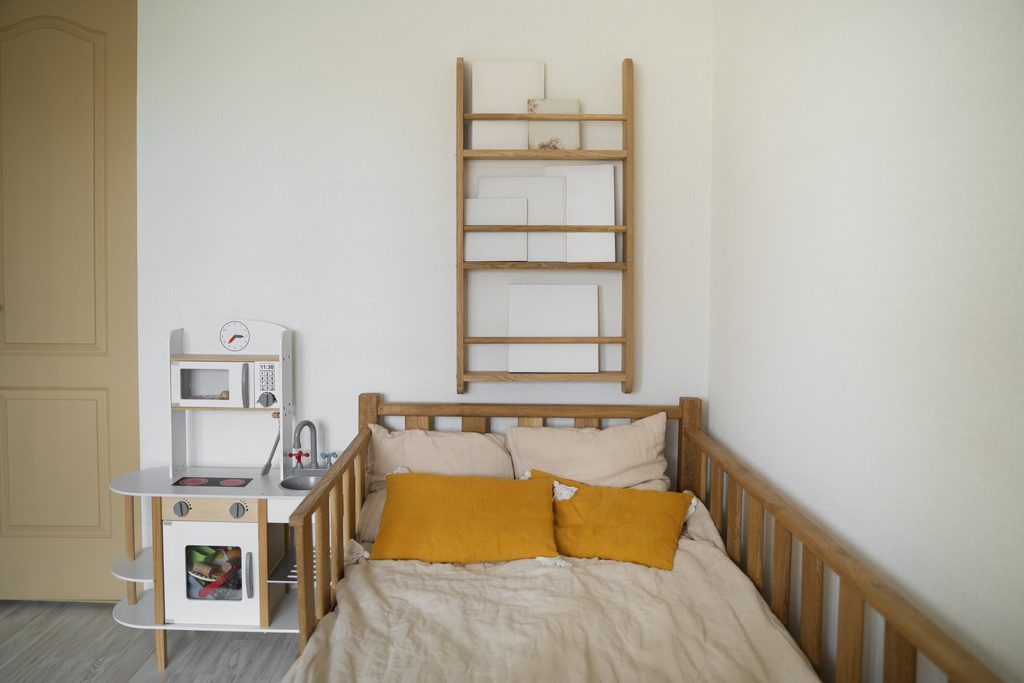
A child’s room has to do more than look good in a photo. It needs to survive spilled paint, growth spurts, changing interests, and years of daily use, while still staying safe and genuinely functional. That combination makes it one of the more demanding rooms to design well, even though it is often one of the smallest in the house.
This guide covers practical kids bedroom interior design ideas for Pune homes: safety basics, furniture that grows with your child, storage, study space, and the choices that help a room stay relevant for years rather than needing a redo every two.
Design for the Next Five Years, Not Just Today
The biggest planning mistake in a kids bedroom is designing around a child’s current age alone. A toddler’s room needs change fast, and furniture bought for a five-year-old often looks wrong, or simply doesn’t fit, by the time they turn eight.
- Choose furniture with adjustable or extendable components where possible, such as height-adjustable study chairs
- Avoid theme-heavy decor that a child may outgrow interest in within a year or two
- Pick a neutral base palette with character added through easily changeable elements like bedding, art, and accessories
- Plan storage that can shift from toys to books to study materials as needs change
Tip: Spend more on structural pieces like the bed and study desk, which are harder to replace, and less on decorative elements that are easy to swap out as your child’s taste changes.
Safety Comes Before Style
A kids bedroom has different safety requirements than any other room in the house, and these should be decided before any aesthetic choices are finalised.
- Round or soft-edged furniture corners, especially on low tables and bed frames
- Non-toxic, low-VOC paint, particularly important in a room where a child spends many hours sleeping
- Window safety grills or locks, especially for rooms above the ground floor
- Covered electrical sockets, placed higher on the wall and away from the bed
- Non-slip flooring, since kids’ rooms see more running and jumping than most adult spaces
Furniture and fittings that meet recognised safety specifications offer a useful baseline. The Bureau of Indian Standards publishes relevant specifications for furniture and electrical fittings, and asking whether products are BIS-certified is a reasonable question for any kids’ room project.
Choosing the Right Bed for the Age and Space
The bed usually anchors the whole room layout, so getting this choice right early simplifies everything else.
| Age group | Bed type to consider |
|---|---|
| Toddler (2-4 years) | Low-height bed or toddler bed, close to the floor for safety |
| Young child (5-9 years) | Single bed with storage drawers underneath |
| Pre-teen (10-13 years) | Single or loft bed, freeing floor space for a study area below |
| Shared sibling room | Bunk bed or trundle bed, depending on age gap and available floor area |
A loft bed is particularly useful in smaller Pune apartments, since it frees up valuable floor area underneath for a desk, reading nook, or additional storage.
Storage That Grows With Your Child
Toys, books, and clothes all multiply faster than most parents expect, and storage needs shift in character as a child grows older.
- Open bins or baskets at a child’s eye level for toys, which encourage independent tidying
- A mix of open and closed storage, so frequently used items stay accessible while clutter stays hidden
- A tall bookshelf that can transition from picture books to textbooks over the years
- Wardrobe sections sized for both hanging clothes and folded items, since the ratio shifts as children grow
For broader storage strategies that apply across room types, our home interior planning guide covers how to think through storage needs before finalising any layout.
Creating a Dedicated Study Corner
As children move through school, a quiet, well-lit study space becomes increasingly important, even in a smaller room.
- Position the desk near natural light, with the child facing the window rather than away from it, where possible
- Add a dedicated task light for evening study, separate from the room’s general lighting
- Keep the desk area visually separate from the play or sleep zone, even if it is just a rug or shelf dividing the space
- Choose a chair with proper back support rather than a decorative but uncomfortable seat
Colour and Lighting Choices
Colour in a kids bedroom should support both energy and rest, which can feel like competing goals in a single room.
- Use calmer, softer tones near the bed to support sleep, even if brighter colours appear elsewhere in the room
- Reserve bold colours or patterns for one accent wall rather than the whole room, so the space is easy to refresh later
- Layer lighting: a soft night light, general ceiling lighting, and a focused desk lamp for different needs through the day
- Avoid very bright, cool-toned lighting directly above the bed, which can interfere with winding down at night
If you are deciding on an overall style direction for the room, our guide on choosing the right interior style covers how different styles translate across various room types, including children’s spaces.
Designing for Shared Sibling Rooms
Many Pune homes have siblings sharing a room, which adds its own planning considerations beyond a single-child bedroom.
- Give each child a clearly defined personal zone, even within a shared room, using a bunk bed, room divider, or distinct storage units
- Allow for some individuality in bedding or decor within each zone, even with a shared overall palette
- Plan separate study areas if possible, or a shared desk with clear time-based or zone-based boundaries
- Consider age gaps carefully; a large gap may need more acoustic separation for differing bedtimes
Material Choices That Hold Up to Daily Use
Kids’ rooms see more wear than almost any other room in the house. Material choices should account for this from the start.
- Flooring: scratch-resistant laminate or vitrified tiles, which handle toys and furniture movement well
- Paint: washable, matte or satin finish paint that tolerates occasional marks and easy cleaning
- Fabrics: machine-washable curtains and bedding, since spills and stains are routine in this room
- Furniture edges: laminate or lacquer finishes that resist scuffing better than raw wood surfaces
Budgeting for a Kids Bedroom
A kids bedroom does not need to be the most expensive room in the home, but a few areas are worth prioritising over others.
- Invest more in the bed and study desk, since these see the heaviest daily use and are harder to replace
- Choose mid-range storage solutions that are functional and sturdy rather than highly decorative
- Keep decor elements, like wall art or themed accessories, in the lower-cost category, since these are the easiest to update later
- Budget for safety additions, like window grills and socket covers, as a non-negotiable line item
For broader cost context across room types in Pune, our construction and renovation cost guide is a useful reference point.
Common Mistakes in Kids Bedroom Design
A few patterns show up repeatedly in children’s rooms and are worth avoiding from the start.
- Over-committing to a theme. A fully themed room can feel outdated within a year or two as interests shift.
- Ignoring future growth. Furniture that only suits a toddler often needs full replacement within a few years.
- Underestimating storage needs. Toys and books accumulate faster than most parents plan for initially.
- Skipping proper task lighting. A single ceiling light is rarely enough once homework becomes part of daily life.
- Using sharp-edged furniture. Rounded corners matter more in this room than almost anywhere else in the home.
Vastu Considerations for a Kids Bedroom
Many Pune families also consider Vastu principles when planning a child’s room, and a few adjustments are usually possible without any structural change.
- Position the study desk so the child faces east or north while studying, where the layout allows
- Keep the bed away from directly facing the door
- Avoid placing a mirror directly opposite the bed
- Keep the north-east corner of the room relatively open and uncluttered
Where the existing layout limits these choices, a designer can usually suggest furniture placement adjustments that address the main principles without any construction work.
Involving Your Child in the Design Process
Children, even young ones, usually have strong opinions about their own space. Involving them in a few decisions, within reason, tends to improve how well they actually use and enjoy the room.
- Let them choose between two or three pre-shortlisted colour options rather than an open-ended choice
- Ask what activities matter most to them, such as reading, drawing, or building, and design storage around those
- Involve older children in arranging personal items like photos, awards, or hobby displays
- Keep final decisions on safety-related elements, like furniture type and window fittings, with the parents
This balance tends to produce a room that feels personal to the child while still meeting practical and safety requirements that only an adult perspective can fully account for.
Transitioning the Room as Your Child Grows
Rather than a full redesign every few years, plan a few scheduled updates that keep the room relevant without starting from scratch each time.
- Around ages 5 to 6: shift from a crib or toddler bed to a single bed with study-ready furniture nearby
- Around ages 9 to 10: introduce a proper desk setup as schoolwork increases, and reduce dedicated play storage
- Around ages 12 to 13: refresh the colour palette and decor to reflect changing tastes, while keeping the core furniture
Planning for these transition points at the design stage, rather than reacting to them later, keeps costs lower and avoids unnecessary full-room overhauls.
Planning a Kids Room as Part of a Larger Home
If you are designing a child’s room as part of a full home project, it helps to see how it fits alongside the rest of your layout. Our guide on 3 BHK home interior design covers room-by-room planning for larger homes, including how to position children’s rooms relative to shared and private spaces.
How Ekratna Interiors & Constructions Approaches Kids Bedroom Design
Ekratna Interiors & Constructions designs children’s rooms with safety as a starting requirement rather than an afterthought, and plans furniture and storage with a child’s next few years in mind, not just their current age. Every quotation is written room by room, so parents know exactly what is included before work begins.
To see examples of completed projects, browse our projects page or follow recent work on Instagram.
Planning a Kids Bedroom in Pune?
Talk to Ekratna Interiors & Constructions for a safe, practical kids bedroom design that grows with your child.
Book a Free ConsultationFrequently Asked Questions
What should I prioritise in kids bedroom interior design?
Safety comes first in kids bedroom interior design: rounded furniture edges, non-toxic paint, and secure window fittings. After that, prioritise furniture and storage that can adapt as your child grows, rather than a fully themed look that will need replacing.
What type of bed is best for a child’s room?
This depends on age: a low-height bed suits toddlers, a single bed with storage drawers works well for young children, and a loft bed is useful for pre-teens or smaller rooms where floor space is limited.
How do I design a shared bedroom for siblings?
Give each child a clearly defined personal zone using a bunk bed, divider, or separate storage units, and allow some individuality in bedding or decor within each zone, even with a shared overall colour palette.
What paint is safe to use in a kids bedroom?
Choose washable, low-VOC, non-toxic paint in a matte or satin finish. This tolerates everyday marks and is easier to clean than standard wall paint, which matters in a heavily used room.
How much should I budget for a kids bedroom?
Costs vary by material and furniture choice, but it generally helps to spend more on the bed and study desk, which see the heaviest use, and keep decorative elements in a lower-cost category that is easy to update later.
How can I make a kids bedroom design last longer?
Choose a neutral base palette with character added through easily changeable elements like bedding and art, and pick furniture that can adapt to different ages rather than one tied to a single stage of childhood.
For more planning guides and project ideas, visit the Ekratna blog.