
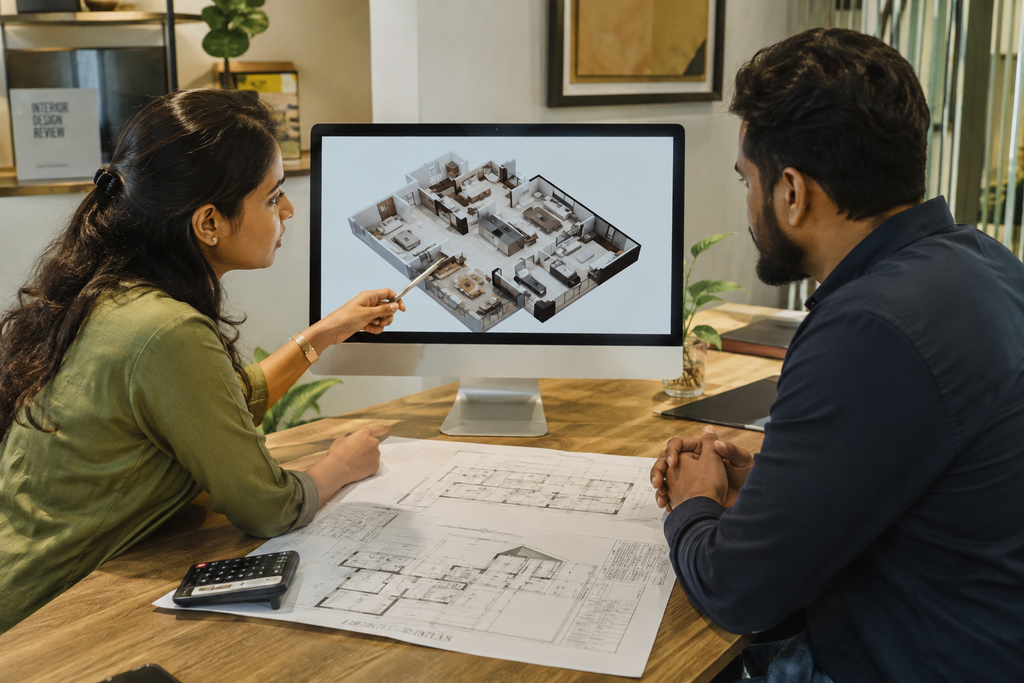
Most interior projects do not go wrong because of bad taste. They go wrong because of unspoken assumptions. You imagined a full wardrobe wall; the designer planned a slim one. You expected the work to finish in 60 days; the designer counted 90. One honest conversation at the start prevents most of this. Knowing the right things to discuss with your interior designer makes that conversation easy.
This guide covers the things to discuss with your interior designer before any work begins. Use it as a checklist for your first meeting. It is written for Pune homeowners, whether you are furnishing a new flat, upgrading an older home, or planning a full interior with Ekratna Interiors & Constructions.
These are the essential things to discuss with your interior designer, and each point below explains what to ask, why it matters, and what a good answer sounds like. Keep it short, keep it honest, and write the answers down.
Why the First Meeting Matters More Than You Think
The things to discuss with your interior designer in that meeting shape everything that follows.
The first meeting sets the direction for the whole project. Design, budget, and schedule all trace back to what was agreed in those early conversations.
A clear discussion helps in three ways:
- It aligns your expectations with what is actually possible in your space.
- It exposes hidden costs before you sign anything.
- It builds trust, so later decisions feel easier.
If you have not yet planned your rooms and priorities, read our home interior planning guide first. You will walk into the meeting with sharper questions.
1. Your Real Budget and How It Will Be Used
Budget is the first of the things to discuss with your interior designer, and the one people avoid the most. Many homeowners hide their number, hoping for a lower quote. That usually backfires.
When a designer knows your real range, they can decide where to spend and where to save. A good designer will not simply spend all of it. They will show you how to split it across rooms, materials, and furniture.
What to ask
- How should my budget be divided between rooms?
- Which items are worth spending more on, such as kitchen hardware or wardrobe fittings?
- Where can I save without hurting quality?
Tip: Keep a 10 to 15 percent buffer for changes and surprises. Ask your designer to keep it separate from the main estimate.
For a deeper look at how costs work, see our blog on interior design costs in Pune.
2. Scope of Work: What Is and Is Not Included
“Complete interior” means different things to different companies. One may include only furniture and carpentry. Another may include civil changes, painting, lighting, and curtains.
Ask for the scope in writing, room by room. Then check for the items people often assume are included:
- False ceiling and electrical points
- Painting and wall texture
- Curtains, blinds, and soft furnishings
- Loose furniture such as sofas and beds
- Appliances, chimney, and hob
- Deep cleaning after work is done
Our services page lists what Ekratna Interiors & Constructions handles, so you can compare it against any other quote you receive.
3. Your Lifestyle, Family, and Daily Habits
A home should fit the people who live in it. Tell your designer how your day really works, not how you wish it worked.
Points worth sharing
- How many people live in the home, and their ages
- Whether elderly members need easy access and non-slip floors
- Whether you have children who need play space and rounded corners
- Pets, and how they use the space
- Whether you cook daily, or mostly order in
- Whether you work from home and need a quiet corner
A family that cooks heavy Indian meals every day needs a different kitchen from a couple who cooks twice a week. Details like this change the layout, the ventilation, and the material choice.
4. Design Style and Personal Taste
You do not need to know design terms. You only need to show what you like. Bring photos, saved Instagram posts, or screenshots. Also bring examples of what you dislike, because that is equally useful.
Ask your designer to explain how your preferred style will suit your flat’s size, light, and layout. A style that looks great in a large villa may feel heavy in a compact 2 BHK.
If you are unsure between styles, our guide on how to choose the right interior style can help you narrow it down before the meeting. You can also browse our work on Instagram for ideas.
5. Timeline and Milestones
Delays are the most common complaint in interior projects. The best defence is a clear schedule agreed at the start.
Ask for a timeline with milestones, not just a final date. A typical flow looks like this:
| Stage | What happens |
|---|---|
| Design finalisation | Layouts, 3D views, material selection |
| Civil and electrical | Wall changes, wiring, plumbing, false ceiling |
| Carpentry and fitting | Wardrobes, kitchen, storage, panelling |
| Finishing | Painting, polish, lighting, hardware |
| Handover | Cleaning, snag check, final walkthrough |
Also ask what could cause delays. Late material approval from you is one of the biggest reasons, so know your own deadlines too.
6. Materials, Brands, and Quality Standards
Two quotes can look identical and still be very different in quality. The difference often sits in the materials.
Questions to ask
- What board is used for carpentry: plywood, MDF, or HDHMR?
- Is it marine-grade or BWP plywood in the kitchen and bathrooms?
- Which brands are used for laminates, hinges, channels, and paint?
- Can I see physical samples before approving?
Look for products that meet Indian standards. The Bureau of Indian Standards publishes specifications for many building and furniture materials, and asking whether a product is BIS-certified is a fair question.
7. Payment Schedule and Terms
Money should move in step with progress. Discuss the payment plan before you sign, not after.
A fair schedule ties each instalment to a completed stage. For example, an advance on booking, a payment on design approval, further payments as carpentry and finishing progress, and a final payment after handover.
Be careful with any plan that asks for most of the money upfront. Also ask:
- Are GST and other taxes included in the quote?
- What happens to the advance if I cancel?
- Will I receive proper receipts and invoices?
8. Design Fees, Revisions, and Changes
Some companies charge a separate design fee. Others include it in the project cost. Neither is wrong, but you should know which applies to you.
Discuss how many design revisions are included, and what happens if you change your mind midway. A change after carpentry has started can cost far more than a change on paper. Ask your designer to explain the point after which changes become expensive.
Tip: Freeze your design only after you have reviewed the 3D views and the material samples together. Most regrets come from approving a drawing you did not fully understand.
9. Site Supervision and Communication
Once work begins, the project lives on site. Ask who will supervise it, how often they visit, and how you will receive updates.
- Who is my single point of contact?
- Will I get weekly progress photos or reports?
- How quickly are calls and messages answered?
- Can I visit the site any time?
If you live in a society, also ask about permissions. Many Pune housing societies restrict working hours, debris disposal, and material movement. Rules for structural changes can also involve local authorities such as the Pune Municipal Corporation. A good designer will guide you on this early.
10. Warranty, After-Sales Service, and Handover
The relationship should not end on handover day. Wood swells in the monsoon, hinges loosen, and paint shows small cracks. These are normal, so ask how they will be handled.
What to confirm
- Warranty period on carpentry, hardware, and finishes
- What the warranty covers and what it excludes
- How to raise a service request and the response time
- A snag list walkthrough before final payment
Ask for all of this in writing. A clear warranty shows that the company stands behind its work.
Extra Things to Discuss With Your Interior Designer for Peace of Mind
Beyond the ten main points, a few smaller things to discuss with your interior designer can save real trouble later. Raise them early, even if they seem minor.
- Lighting plan. Ask for a mix of ambient, task, and accent lights, and where each switch will sit.
- Electrical and plumbing points. Decide socket positions, TV points, and geyser locations before the false ceiling and panelling are fixed.
- Ventilation and moisture. Pune monsoons are humid, so ask how wardrobes and kitchen units will be protected.
- Furniture you already own. Tell the designer which pieces must stay so the layout can work around them.
- Maintenance. Ask how each finish should be cleaned, and which ones need regular care.
Treat these as bonus things to discuss with your interior designer. Together with the ten main points, they give you a complete brief that any professional can follow with confidence.
Quick Checklist: Things to Discuss With Your Interior Designer
Print or save this list of things to discuss with your interior designer and tick each item during your meeting.
| Topic | Key question |
|---|---|
| Budget | How will my budget be split across rooms? |
| Scope | What is included and excluded, in writing? |
| Lifestyle | Does the plan fit my family’s daily routine? |
| Style | Will this style suit my flat’s size and light? |
| Timeline | What are the milestones and possible delays? |
| Materials | Which boards and brands, and can I see samples? |
| Payments | Are instalments linked to progress? |
| Changes | How many revisions are included? |
| Supervision | Who is my contact and how often will I get updates? |
| Warranty | What is covered and for how long? |
Common Mistakes to Avoid in the First Meeting
Even prepared homeowners slip on a few points. Watch out for these:
- Hiding your budget. It leads to designs you cannot afford or quotes padded to fit.
- Agreeing verbally. If it is not written, it is easy to forget or dispute.
- Judging only by price. The lowest quote often hides missing items.
- Skipping the site visit. Measurements and site conditions affect the design.
- Rushing approval. Take a few days to review drawings and quotes calmly.
If you are also planning changes to an older home, our home renovation guide for Pune covers extra points to raise with your designer. For a room-wise view of a larger home, see our 3 BHK interior planning guide.
How to Prepare Before You Meet
A little preparation makes the meeting far more useful. Before you go, gather:
- Your floor plan, or the builder’s brochure layout
- A list of must-haves and nice-to-haves
- Photos and references for the look you like
- Your budget range and target move-in date
- A list of your family’s daily routines
Arrive with this list of things to discuss with your interior designer and you will save hours. The designer can move quickly to real solutions instead of basic questions.
Ready to Start the Conversation?
Talk to the team at Ekratna Interiors & Constructions. We will walk through this checklist with you, answer every question openly, and give you a clear written plan for your Pune home.
Book a Free ConsultationFrequently Asked Questions
What are the most important things to discuss with your interior designer?
Start with budget, scope of work, timeline, materials, and payment terms. These five points decide most of the cost and risk. After that, cover your lifestyle needs, design style, supervision, and warranty.
Should I tell my designer my exact budget?
Yes, or at least a realistic range. It lets the designer plan spending sensibly and avoid quotes that do not fit. A good designer will use the budget to protect you, not to spend all of it.
How many meetings do I need before starting the project?
Usually two to four. The first covers needs and budget, the next reviews layouts and 3D views, and another finalises materials and the quote. Take time between meetings to think and compare.
Should the scope of work be given in writing?
Always. A written, room-by-room scope avoids disputes about what was included. It should list items, materials, and finishes clearly.
How do I avoid delays in my interior project?
Agree on milestones at the start, approve materials on time, and avoid major changes once carpentry begins. Also check society rules for working hours and material movement.
What warranty should I expect on interior work?
It varies by company and item. Ask for the warranty period on carpentry, hardware, and finishes in writing, along with what is excluded and how to request service.
Can I make changes after the design is approved?
Small changes are possible, but they can affect cost and timeline, especially after work has started. Ask your designer when changes become expensive and freeze the design only when you are fully sure.
Follow our latest projects and ideas on Instagram, or explore more guides on the Ekratna blog.

2 Comments
Your content is a masterpiece of clarity, always sparking fresh ideas. I’d love to see you probe how these principles intersect with emerging trends, such as sustainability or digital transformation. Your knack for simplifying intricate subjects is truly remarkable. Thanks for delivering such powerful posts—keep them coming!
bcdentalstudyclub.ca
Thank you for your thoughtful feedback! We’re glad you found our article helpful. Sustainability and digital transformation are becoming important parts of modern interior design, from eco-friendly materials and energy-efficient solutions to smart home technology. We’ll continue sharing practical insights to help homeowners make informed design decisions. Stay connected with Ekratna Interiors & Constructions for more useful tips on interior design and construction!