
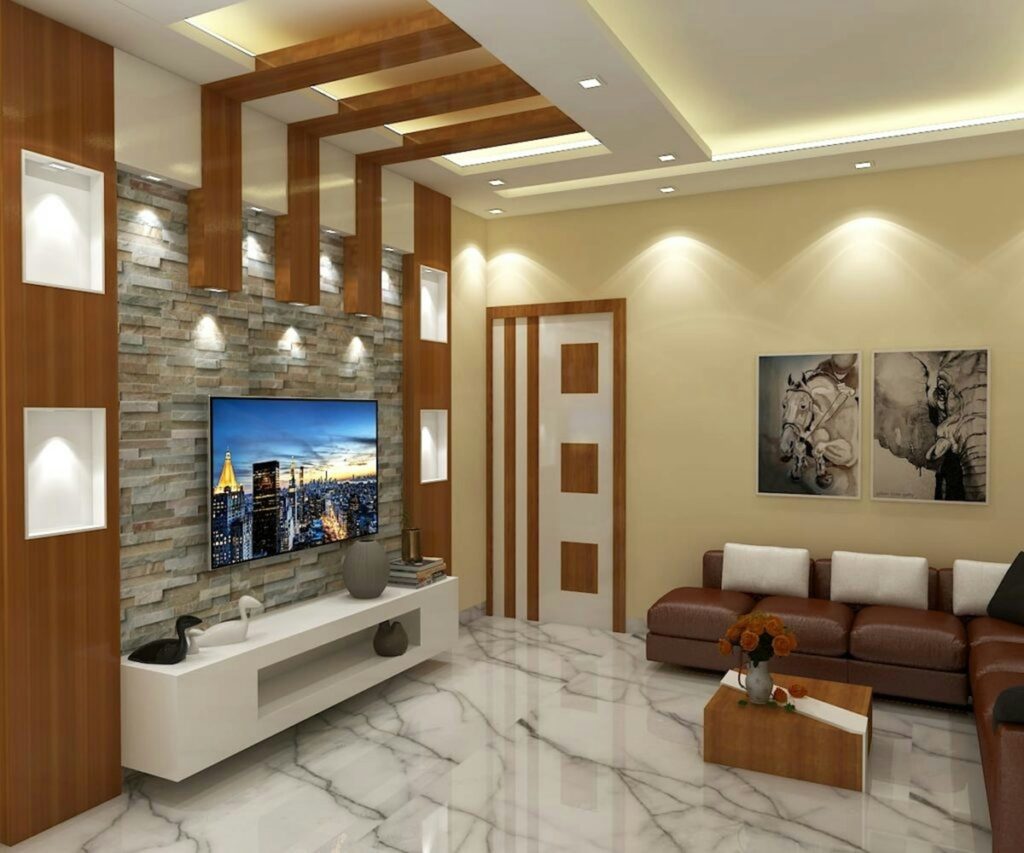
The living room is the one space in a home that has to work harder than any other — it’s where guests are received, where the household actually spends most of its shared time, and often where a TV, a dining zone and a work corner all compete for the same square footage. Good living room interior design isn’t about choosing a trendy sofa or a bold accent wall; it’s about making dozens of small layout and material decisions that add up to a room that’s genuinely comfortable to live in every day. This guide covers what actually makes a modern living room work in Pune homes, independent of flat size, from furniture arrangement through to lighting and material choices.
What Makes Living Room Interior Design Feel Genuinely Modern
Modern doesn’t have to mean minimal or stark. In practice, the living rooms that read as considered and current share a few consistent traits: clean-lined furniture rather than heavily ornamented pieces, a restrained colour palette with one or two intentional accents, and enough negative space that the room doesn’t feel like every surface needs to be filled with something. Chasing individual trends — a specific accent colour or a particular furniture silhouette — tends to date faster than committing to these underlying principles, which stay relevant regardless of which specific style is popular in a given year.
Furniture Arrangement and Zoning
Before choosing any individual piece, map out how the room actually needs to function — seating for conversation, a media zone for the TV, and depending on the flat, a dining area sharing the same open space. Arranging furniture to create distinct zones, even without physical dividers, makes a shared open-plan room feel more organised than furniture placed purely to fill available wall space. A rug is one of the simplest tools for this — anchoring the seating area visually, even in a room where the dining table sits just a few feet away.
Sofa Selection and Seating Layout
The sofa is usually the single largest investment in a living room, and getting its scale right matters more than its specific style. A sofa too large for the room dominates the space and restricts movement; one too small leaves the room feeling under-furnished no matter how well everything else is chosen. Modular seating has become a popular choice specifically because it can be reconfigured as the room’s needs change — a straight sofa for a smaller gathering, an L-shaped configuration when hosting more people.
TV Unit and Media Wall Design
The television has moved from being the room’s central focal point to something more deliberately integrated into a broader media wall design. Wall-mounted units with concealed cable management, paired with shelving or wall panelling around the screen rather than a standalone unit, give the wall a more considered, less appliance-focused look. For households that primarily use the room in the evening, backlighting behind the TV — a simple LED strip — reduces eye strain and adds a subtle layered lighting effect without much additional cost.
Lighting Layers for a Modern Living Room
A single ceiling fixture is rarely enough for a room that needs to function for entertaining, relaxing and sometimes working, all at different times of day. Layering ambient lighting (main ceiling fixtures), task lighting (a reading lamp near a favourite seat), and accent lighting (wall washers, cove lighting, or backlighting behind furniture) gives a living room genuine flexibility. Choosing LED fixtures rated under the Bureau of Energy Efficiency’s star labelling programme keeps running costs down over years of daily use, which adds up meaningfully in a room that’s lit for several hours every evening.
Color Palettes and Wall Treatments
Warm neutrals — off-whites, soft greys, warm beiges — remain the most reliable base for a living room, since they work well with a wide range of furniture styles and don’t compete visually with the room’s other elements. A single accent wall, whether painted, textured, or panelled, gives the room a focal point without overwhelming it. Wall panelling specifically has become a popular modern alternative to painted accent walls, adding tactile depth that a flat colour simply can’t replicate.
Window Treatments and Their Effect on the Room
Curtains and blinds do more than control light — they significantly affect how a living room feels overall. Sheer curtains that filter daylight while maintaining privacy work well for rooms that need natural light throughout the day, while layered treatments combining sheers with heavier drapes offer flexibility for evening privacy without sacrificing daytime brightness. Blinds, particularly in a modern aesthetic, offer a cleaner architectural line than curtains but provide less softness to the room’s overall texture, which is worth weighing against the rest of the space’s material palette before deciding.
Flooring Choices for a Living Room
Flooring sets the tone for the entire room and needs to balance appearance with practicality, especially in a space that sees heavy daily foot traffic. Vitrified tiles remain the most practical choice for Pune’s climate, offering durability and easy maintenance without significant ongoing upkeep. For a warmer feel underfoot, engineered wood or laminate flooring is a popular upgrade, though it requires slightly more care to avoid water damage near balcony doors or during monsoon months when humidity levels rise considerably across the city.
Designing a Living Room That Adapts Across Seasons
Pune’s distinct seasons — hot summers, a pronounced monsoon, and cooler winters — genuinely affect how a living room is used day to day. Lighter, breathable soft furnishings suit the warmer months, while layering in heavier textiles like a wool throw or textured cushions works well once temperatures cool. Rather than a complete seasonal overhaul, small swappable elements — cushion covers, a folded throw, even swapping out artwork — let the room adapt without requiring a full redesign each time the weather shifts meaningfully.
Balancing Open-Plan Layouts With Cozy Zones
Many Pune apartments now combine living and dining into a single open space, which is efficient but can feel impersonal if not handled deliberately. Introducing softer elements — cushions, throws, a warm-toned rug, layered lighting specifically in the seating zone — counteracts the more clinical feel open-plan spaces can have, without requiring any structural changes. Our 2 BHK home interior design guide covers additional ideas for making open-plan living-dining zones feel properly defined even without walls.
Storage Solutions for the Living Room
A living room accumulates clutter faster than almost any other room — remote controls, books, chargers, decorative items that multiply over time. Built-in storage worked into the TV unit or a low console with closed cabinetry keeps this contained without requiring a visible, dedicated storage piece. A coffee table with a hidden storage compartment is a small addition that meaningfully reduces visible clutter on the table’s surface day to day.
Materials and Sustainable Choices
For furniture and wall panelling, moisture-resistant (MR) grade plywood remains a sensible baseline for Pune’s humidity, with boiling-water-resistant (BWR) grade worth considering for pieces near windows or balcony doors exposed to monsoon moisture. Confirming BIS certification under IS 303 gives you a verifiable quality standard rather than relying on a vague assurance from a vendor.
Smart Home Elements Worth Considering
Smart lighting controls, app-based or voice-activated, are one of the more practical smart home additions for a living room specifically, since lighting is used constantly and benefits genuinely from easy scene switching between “bright and functional” and “relaxed evening” without manually adjusting multiple fixtures. Smart plugs for lamps and other non-hardwired fixtures are a low-cost way to add this flexibility even in a home that isn’t otherwise set up for smart home integration.
Budgeting for a Living Room Makeover
Costs vary enormously depending on scope — a fresh coat of paint and new soft furnishings sit at one end, while a full media wall with custom carpentry, wall panelling and layered lighting sits at the other. Separating “essential” changes from “enhancement” changes helps prioritise spending if the full vision doesn’t fit the initial budget. Our complete home interior cost guide breaks down typical cost drivers across every room, including the living room specifically.
Common Mistakes in Living Room Design
- Choosing furniture scale without measuring the room first: A sofa that looks proportional in a showroom can dominate or underwhelm a specific room without proper measurement beforehand.
- Over-decorating every surface: A living room with too many decorative objects competing for attention reads as cluttered rather than considered.
- Ignoring lighting until the end: Retrofitting proper lighting after furniture and finishes are chosen is far more limited than planning it from the start.
- Choosing trend-driven pieces over functional ones: A striking accent chair that’s uncomfortable to actually sit in rarely earns its place long-term.
Working With an Interior Design Company in Pune
An established interior design company in Pune can help translate these principles into your specific room’s dimensions, natural light and existing architecture, rather than applying a generic template that ignores what actually makes your space unique. You can explore our full range of interior design services, see completed projects on our projects page, or follow current work on our Instagram page. Reach out through our contact page to discuss your living room.
Conclusion
A genuinely modern living room isn’t defined by chasing whatever’s currently trending — it’s defined by furniture scaled properly to the room, lighting that works across different times of day, and a colour and material palette that feels intentional rather than assembled piece by piece. Getting these fundamentals right consistently produces a room that still feels current years after the initial design, long after any single trend has moved on to something else entirely.
Ready to redesign your living room?
Ekratna Interiors & Constructions can help you plan a living room that’s both functional and genuinely comfortable to live in.
Request a ConsultationFrequently Asked Questions
What furniture scale is right for a small living room?
Measure the room carefully and choose a sofa that leaves adequate walking space around it — a sofa proportioned correctly for the room matters more than any specific style choice.
How many light sources does a living room actually need?
At minimum three layers — ambient (main ceiling light), task (a reading lamp), and accent (wall washers or backlighting) — for genuine flexibility across different uses and times of day.
Is wall panelling worth it over a painted accent wall?
Panelling adds tactile depth a flat colour can’t replicate and tends to look more premium, though it costs more than paint — the right choice depends on budget and how much of a statement you want the wall to make.
How do I make an open-plan living-dining space feel less impersonal?
Use a rug to visually anchor the seating zone, layer in softer textures like cushions and throws, and add dedicated accent lighting specifically in the seating area rather than relying only on general ceiling lighting.
Are smart home features worth adding to a living room?
Smart lighting controls are one of the more practically useful additions, since lighting is used constantly and benefits from easy scene switching without manually adjusting multiple fixtures throughout the evening.
How much does a living room makeover typically cost?
It depends heavily on scope — a refresh with paint and soft furnishings costs far less than a full media wall with custom carpentry and layered lighting. Getting an itemised quote from your designer gives the most accurate figure.

5 Comments
[…] A living room package — TV unit, wall panelling, seating, and lighting — generally falls between ₹1.5 lakh and ₹4 lakh depending on how elaborate the design is. For design inspiration in this category, see Modern Living Room Interior Design Ideas for Pune Homes. […]
[…] broader layout ideas and furniture arrangements, our living room interior design guide has more detail on seating, lighting, and wall treatments that apply well to smaller spaces […]
[…] living room interior design guide covers layout and furniture choices in more depth, much of which applies directly to a […]
[…] can borrow more ideas from our guide on modern living room design for Pune homes. Many of its tips scale down well for […]
[…] guide on modern living room design for Pune homes has more layout and lighting ideas you can […]