
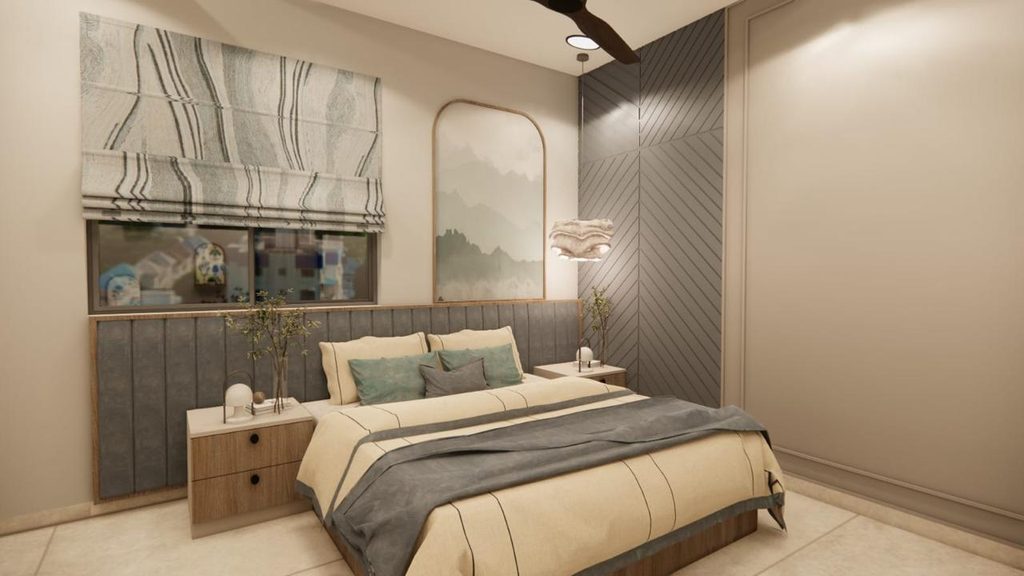
The master bedroom has shifted considerably in recent years — from a purely functional sleeping space to a room homeowners increasingly treat as a genuine retreat, worth the same design attention as a living room. Modern master bedroom design today draws on cleaner lines, more deliberate material choices, and a handful of technology integrations that would have felt unusual just a few years ago. This guide covers the trends genuinely worth considering, and how to tell which ones will actually suit your daily routine rather than just photographing well for a single striking image.
What Defines Modern Master Bedroom Design Today
Modern bedroom design has moved past the stark, cold minimalism it was once associated with, settling instead into a warmer, more livable interpretation that still values clean lines and restraint but pairs them with texture, natural materials and considered lighting. The common thread across genuinely current bedroom design isn’t any single colour or furniture style — it’s a deliberate, considered approach to every element, from wardrobe hardware to ceiling treatment, rather than a room assembled piece by piece without an overarching plan tying it together.
Minimalist Headboards and Furniture Silhouettes
Ornate, heavily carved headboards have given way to cleaner, upholstered or simple wood-panel designs that let the room’s other elements — lighting, wall treatment, textiles — carry more of the visual interest. This shift isn’t purely aesthetic; simpler furniture silhouettes also tend to feel less visually heavy in a room, which matters for a space meant primarily to support genuine rest rather than serve as a showpiece for visitors who rarely, if ever, actually see the bedroom itself.
Statement Ceilings and Ceiling Treatments
Rather than a flat, uniform ceiling, modern master bedrooms increasingly incorporate a subtle cove, a change in texture, or a soft colour wash on the ceiling itself as a considered design element rather than an afterthought. This works particularly well paired with cove lighting, which washes light upward and adds depth to the room without requiring bright, direct fixtures that can feel harsh in a space meant for winding down at the end of the day.
Layered, Tunable Lighting
A single ceiling fixture increasingly feels dated in a well-planned modern bedroom. Layering ambient, task and accent lighting — and where wiring allows, adding dimmable or tunable-white fixtures that shift from cooler daytime tones to warmer evening ones — gives the room genuine flexibility across different times of day. Choosing LED fixtures rated under the Bureau of Energy Efficiency’s star labelling programme keeps running costs manageable for a room with lighting used for several hours daily, without compromising on the flexibility this layered approach provides.
A Curated, Restrained Color Palette
Modern master bedroom design has moved away from stark white-and-grey minimalism toward warmer, more textured neutral palettes — sandy beiges, soft taupe, muted sage — that still feel calm and uncluttered without reading as cold or clinical. A single considered accent, often on the wall behind the bed, remains the preferred way to add personality without disrupting the room’s overall sense of restraint that makes it feel genuinely restful rather than visually demanding.
Textural Contrast Over Pattern
Rather than relying heavily on patterned wallpaper or bold prints, modern bedroom design increasingly builds visual interest through contrasting textures — a boucle or linen headboard against a smooth painted wall, a woven rug against polished flooring, matte cabinet finishes against a glossier accent surface. This approach tends to age better than trend-driven patterns, which can feel dated considerably faster once the specific trend has passed and the room starts to feel visibly tied to a particular moment rather than timeless.
Biophilic Touches and Natural Materials
Incorporating natural materials — real or convincing wood-look finishes, stone-textured accents, a few well-placed plants that tolerate indoor light conditions — brings a grounding, organic quality that pure minimalism can sometimes lack. This trend reflects a broader shift toward bedrooms that feel warm and lived-in rather than showroom-perfect, prioritising how a space feels to actually inhabit over how flawlessly it photographs for a portfolio or social media post.
Built-In Wardrobes With a Cleaner Facade
Handleless or push-to-open wardrobe fronts have become a defining feature of modern bedroom design, removing visible hardware to create a cleaner, more unified wall surface. This works particularly well when the wardrobe finish is chosen to blend closely with the surrounding wall colour, effectively making a large storage element visually recede rather than dominate the room, which matters considerably in a space where the wardrobe often occupies an entire wall.
Smart Home Integration
Smart lighting controls, app- or voice-activated, remain one of the most practically useful smart additions for a bedroom specifically — easy scene switching between bright morning light and a dimmed evening setting without manually adjusting multiple fixtures. Smart blinds or curtains, while a larger investment, are increasingly popular for their ability to automate natural light management without requiring any manual daily adjustment, particularly appealing for households with irregular schedules.
Acoustic Considerations in Modern Bedroom Design
An often-overlooked element of modern bedroom planning is acoustic comfort — soft furnishings, rugs, and upholstered headboards all contribute to sound absorption that a room full of hard, reflective surfaces lacks. In apartment living specifically, where sound transfer between rooms and neighbouring units is a genuine consideration, incorporating these softer elements deliberately rather than as an afterthought meaningfully improves how restful the room actually feels, beyond its purely visual design.
A Dedicated, Well-Considered Dressing Zone
Where space allows, a proper dressing area — a vanity with well-positioned lighting, organised wardrobe interiors rather than just hanging space — has become a defining feature of modern master bedroom planning, reflecting a broader trend toward treating morning and evening routines as worth designing around deliberately, not as an afterthought squeezed wherever space happens to remain once everything else in the room has already been finalised.
Materials That Hold Up to Daily Use
Behind every modern aesthetic choice, material quality fundamentals stay constant. For wardrobe and furniture carcasses, moisture-resistant (MR) grade plywood remains a sensible baseline, with confirming BIS certification under IS 303 giving you a verifiable standard regardless of which aesthetic direction the room ultimately takes. This matters just as much for a stripped-back minimalist room as it does for a more textured, layered design, since the underlying construction quality determines how well any style holds up over years of daily use.
Balancing Trend and Longevity
Not every current trend suits every household, and the ones worth committing to are generally those solving a genuine functional need — better lighting flexibility, cleaner storage, more durable materials — rather than purely aesthetic choices likely to feel dated within a few years. Choosing structural, harder-to-change elements (wardrobe finish, wall colour, flooring) with more restraint, while reserving trend-forward choices for easily updated elements like textiles and decor, keeps a room feeling current for considerably longer than committing fully to any single passing style.
Flooring Choices for a Modern Master Bedroom
Flooring sets the underlying tone for the entire room and increasingly gets as much design attention as walls or furniture in current bedroom planning. Engineered wood or laminate flooring remains popular for the warmth it adds underfoot, particularly appealing in a room meant primarily for rest and relaxation rather than heavy daily foot traffic. Vitrified tiles remain a practical, lower-maintenance alternative, and pairing either flooring choice with a well-chosen rug beneath the bed adds a layer of texture and warmth that hard flooring alone can’t quite achieve on its own, regardless of the underlying material chosen.
Window Treatments in Modern Bedroom Design
Layered window treatments — a sheer layer for daytime privacy and light filtering, paired with a heavier blackout layer for night — have become close to standard in modern bedroom planning, offering flexibility that a single curtain layer simply can’t match. Where budget allows, motorised or smart-controlled blinds add genuine convenience, automating the daily adjustment between daytime light management and evening privacy without requiring any manual intervention each time the light conditions change throughout the day.
Working With an Interior Design Company in Pune
Ekratna Interiors & Constructions can help translate current master bedroom trends into a design suited to your specific room dimensions, natural light and daily routine, rather than a generic template applied regardless of fit or how you actually use the space day to day. You can explore our full range of interior design services, learn more on our about us page, see completed projects on our projects page, or browse more ideas on our blog. Follow current work on Instagram and Facebook, or reach out through our contact page to discuss your bedroom.
Conclusion
Modern master bedroom design isn’t defined by any single trend — it’s defined by cleaner furniture silhouettes, thoughtful lighting, restrained but warm colour palettes, and material choices that hold up to years of daily use rather than just an initial photograph. Applied together, these principles produce a room that feels genuinely current without needing a full redesign the moment any single trend inevitably moves on to whatever comes next in a constantly shifting design landscape.
Ready to update your master bedroom?
Ekratna Interiors & Constructions can help you bring modern design ideas to life in a way that genuinely suits your space and routine.
Request a ConsultationFrequently Asked Questions
What defines modern master bedroom design?
Clean furniture silhouettes, layered and tunable lighting, restrained but warm colour palettes, and handleless wardrobe fronts are among the defining current elements.
Is smart lighting worth adding to a master bedroom?
Generally yes — it’s one of the more practically useful smart home additions, allowing easy scene switching between bright and relaxed settings without manual fixture adjustment.
Should I follow every current bedroom design trend?
Not necessarily — prioritise trends that solve a genuine functional need on structural elements, and reserve purely aesthetic trend choices for easily updated items like textiles.
What colors are trending for modern master bedrooms?
Warmer, textured neutrals — sandy beiges, soft taupe, muted sage — have largely replaced stark white-and-grey minimalism in current bedroom design.
Is a dressing zone necessary in a modern master bedroom?
It’s increasingly popular where space allows, reflecting a broader trend toward designing daily routines deliberately rather than as an afterthought.